Since his historic debut in the autumn of 1962, Spider-Man has acted as the premier canvas for the comic book industry’s most legendary illustrators. Unlike the distant gods of DC Comics or the cosmic titans of early Marvel, Peter Parker was defined by his vulnerability, grit, and grounded humanity. This distinct emotional architecture demanded a completely new visual language. Over thousands of issues, artists didn’t just capture a hero fighting crime; they used negative space, dramatic lighting, radical perspective distortion, and sheer kinetic energy to tell complete psychological stories on a single sheet of glossy paper. These ten covers stand as the absolute zenith of that graphic lineage—voted by historians, artists, and collectors as the most influential and unforgettable imagery in the mythos of the Wall-Crawler.
THE TOP 10 MASTERPIECES
Amazing Fantasy #15 (1962)
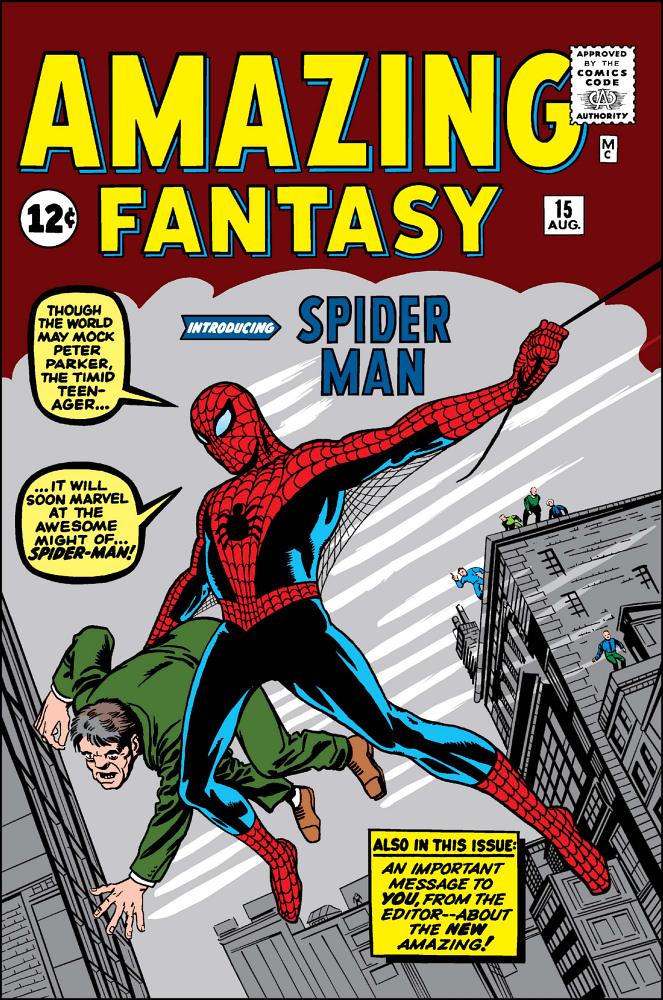
- Jack Kirby (Pencils)
The first appearance of Spider-Man. Steve Ditko drafted an initial cover layout, but editor Stan Lee rejected it in favor of this composition penciled by Jack Kirby. this image broke away from the stiff, muscle-bound poses characteristic of the Golden Age superheroes. This image presented something entirely new – an agile, masked youth swinging effortlessly sideways against a distorted New York cityscape, casually clutching a criminal. The off-center framing and sense of momentum perfectly introduced the world to the unique visual that would define Marvel Comics for decades.
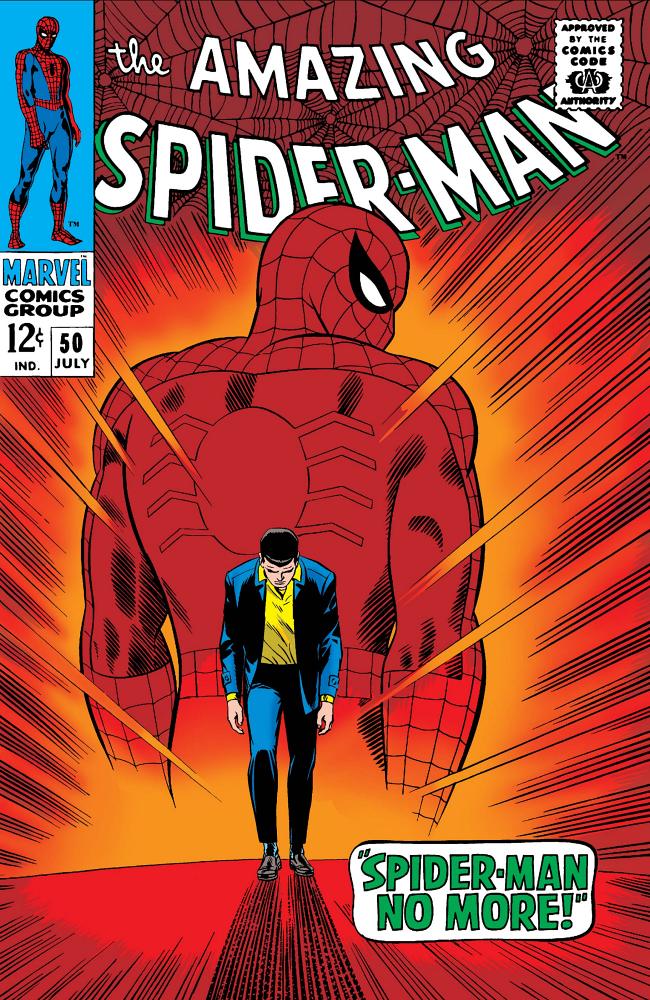
The Amazing Spider-Man #50 (1967)
- John Romita Sr.
John Romita Sr.’s masterpiece conveys an entire multi-issue narrative arc in a single glance. The cover depicts a defeated, slumped Peter Parker walking directly away from the viewer into a cold alleyway, a discarded costume in the trash can. Looming in the blood-red background is the weeping mask of his superhero identity. It is a stunning and emotionally heavy image and it has been directly paid homage to hundreds of times across comic history, as well as famously recreated by director Sam Raimi in 2004’s Spider-Man 2.
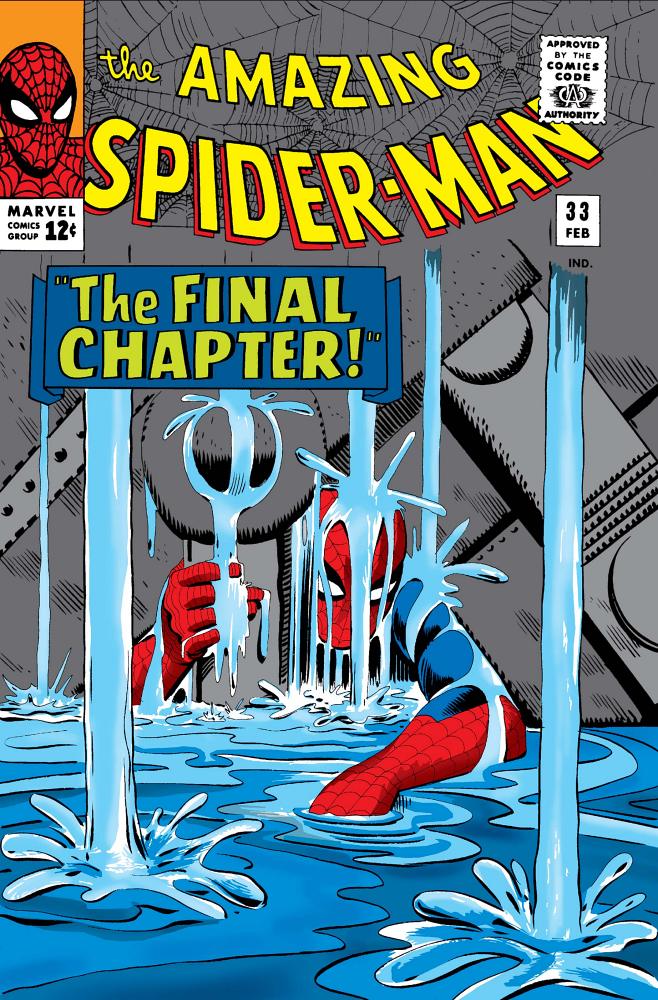
The Amazing Spider-Man #33 (1966)
- Steve Ditko
Steve Ditko’s claustrophobic cover for Issue #33 crystalizes the willpower of Peter Parker. Spider-Man is trapped beneath tons machinery in an underwater stronghold, with water rapidly rising around him and is fighting to lift the crushing weight. Ditko utilizes tight framing, heavy shadows, and erratic water droplets to create a visceral sense of dread and entrapment. The cover stands as a testament to the character’s defining trait, his refusal to stay down when the entire world is crushing him.
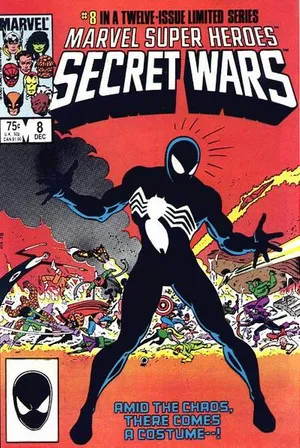
Marvel Super Heroes Secret Wars #8 (1984)
- Mike Zeck
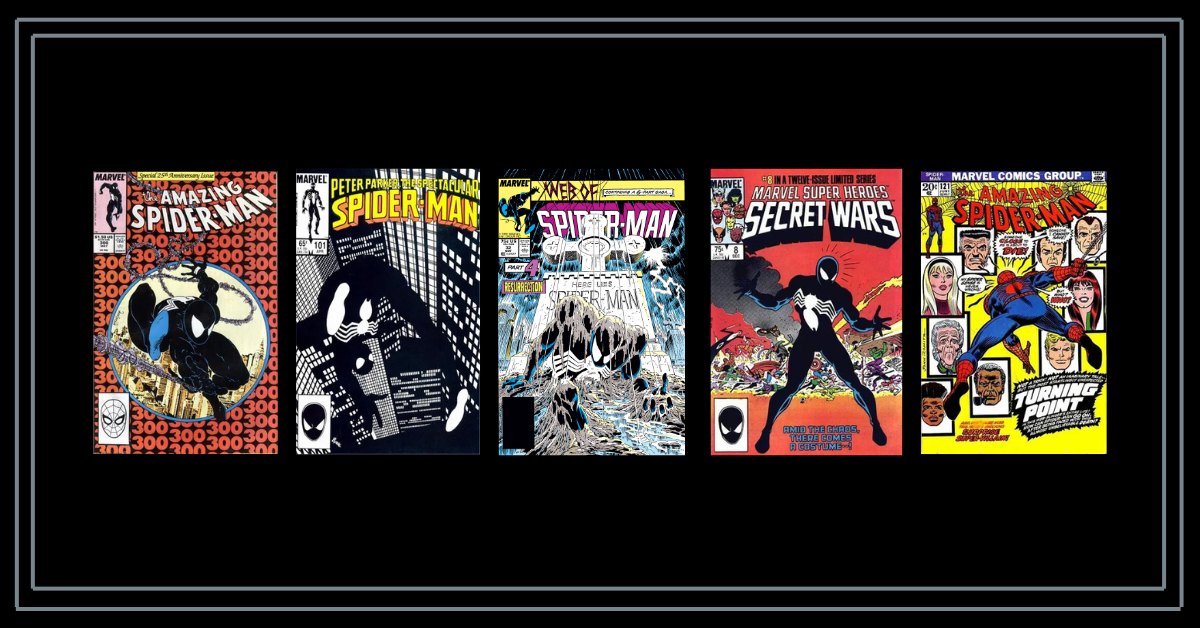
Artist Mike Zeck shocked the comic book world by discarding Spider-Man’s iconic red-and-blue and introducing a sleek, pitch-black, alien-engineered suit. The composition is brilliantly stark: a powerful, clean silhouette of Spider-Man leaping out of a cosmic explosion, the stark white spider emblem commanding the viewer’s focus. This image marked a massive shift in the Spider-Verse and planted the seeds that would ultimately mark the creation of Venom.
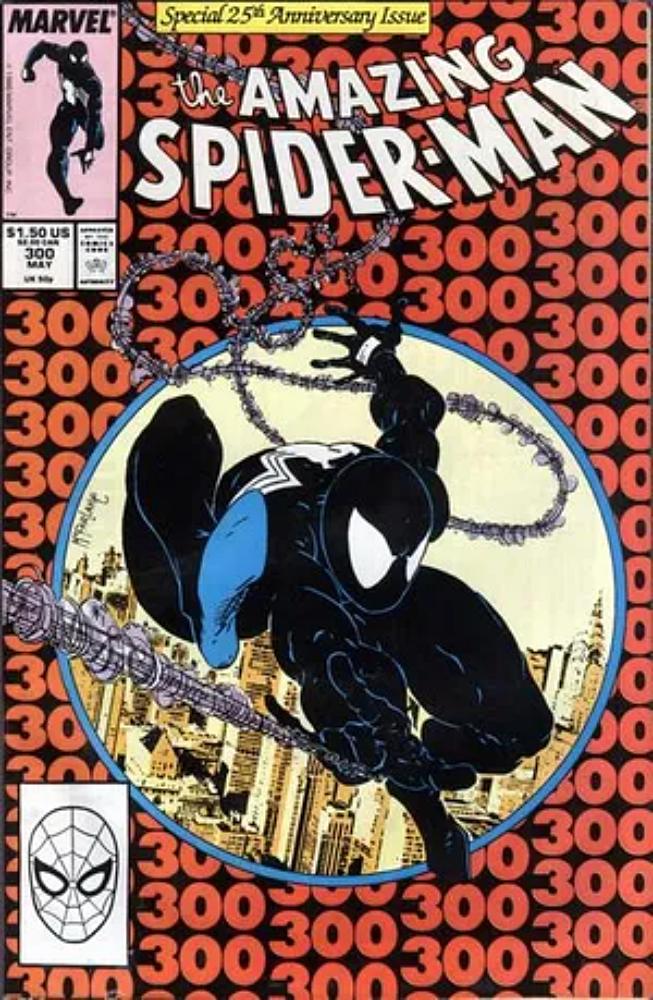
The Amazing Spider-Man #300 (1988)
- Todd McFarlane
Todd McFarlane erupted onto the scene in the late ’19’80s and completely reinventing how Spider-
Man moved and interacted with his environment. For the 300th anniversary issue, McFarlane delivered an unforgettable visual of a highly crouched, and aggressively coiled Spider-Man using his newly popularized “spaghetti webbing,” framed by a bright red border constructed from repetitive iterations of the number 300. The raw, energetic, and heavily stylized line work was the epitome of the hyper-detailed 1990s comic book aesthetic. This specific issue became one of the most heavily sought-after and valued collector keys.
Web of Spider-Man #32 (1987)
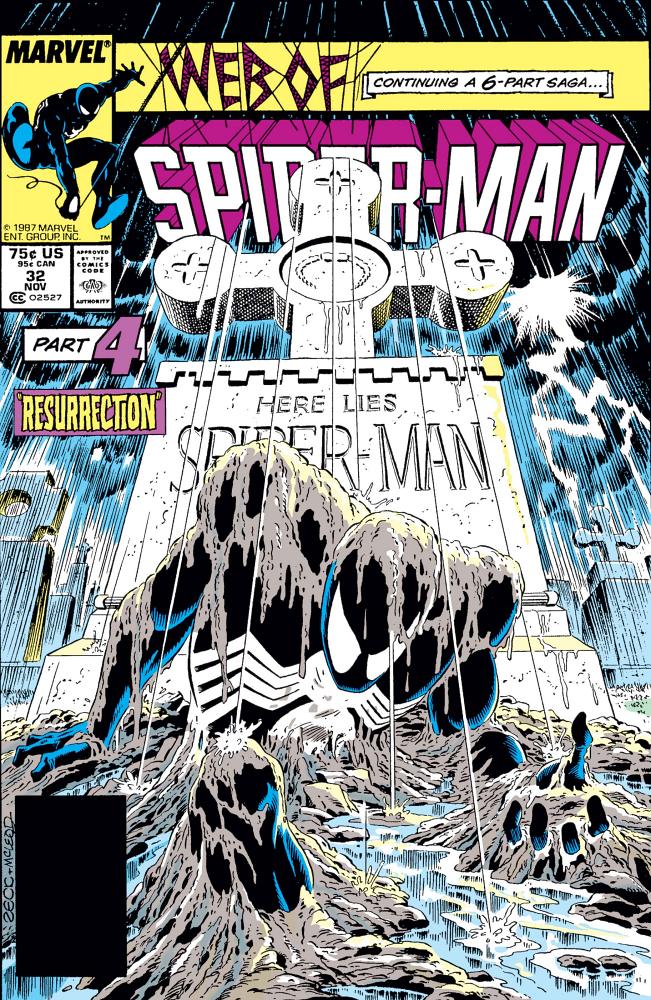
- Mike Zeck
Mike Zeck’s haunting cover for “Kraven’s Last Hunt” was dark and macabre. A resurrected black-clad Spider-Man claws his way frantically out of a muddy, storm-drenched grave beneath a towering tombstone bearing his own name. The monochromatic tone, sharp lightning slashes, and raw desperation of the imagery perfectly matched writer J.M. DeMatteis’s grim prose. This issue signaled a major, permanent shift toward more mature, complex storytelling within mainstream Marvel titles.
The Amazing Spider-Man #39 (1966)
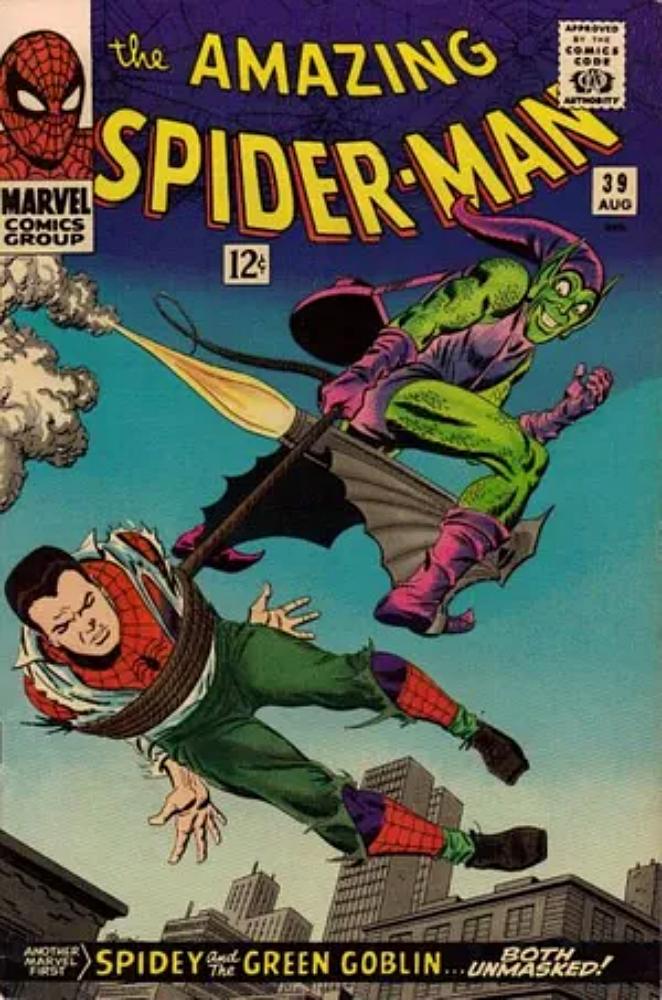
- John Romita Sr.
John Romita Sr., injected a fresh, soap-opera cinematic tension into the book. The image is an unmasked, bound, and helpless Peter Parker dragged through the night sky on the back of the Green Goblin’s iconic glider. Romita’s cleaner, expressive illustrative styJohn Romita Sr., injected a fresh, soap-opera cinematic tension into the book. The image is an unmasked, bound, and helpless Peter Parker dragged through the night sky on the back of the Green Goblin’s iconic glider. Romita’s cleaner, expressive illustrative style immediately elevated the stakes of the narrative. This image laid the groundwork for the warfare between Norman Osborn and the Parker family that remains the definitive rivalry of the franchise.
Spider-Man #1 (1990)
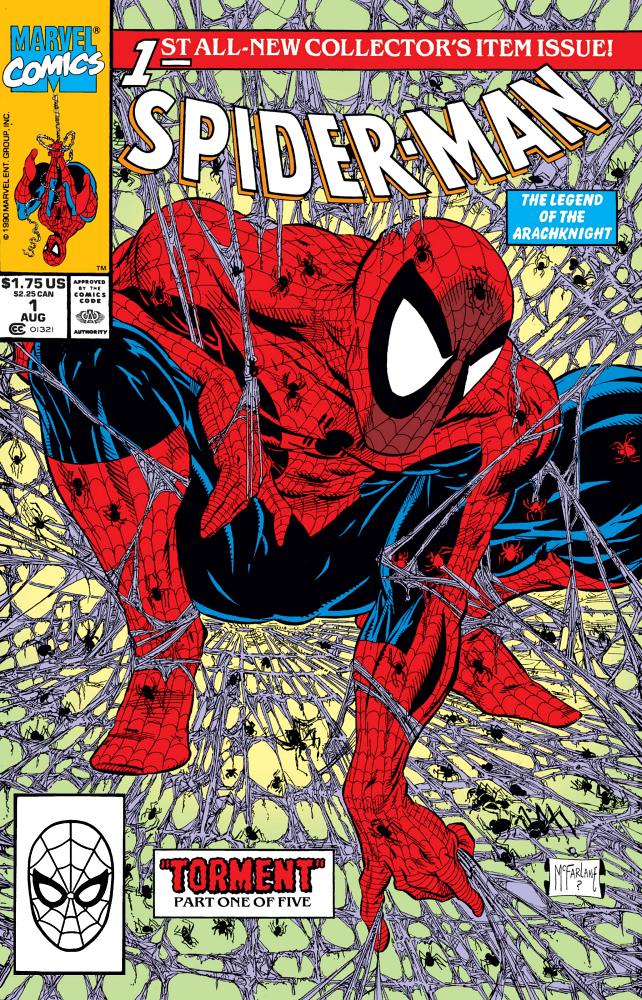
- Todd McFarlane
Given complete creative freedom over a brand-new title, Todd McFarlane filled the entire canvas with a tightly bound, intensely contorted Spider-Man crouching directly amidst an impossibly dense, chaotic matrix of gold and green web strands. The extreme close-up, heavily emphasized costume
textures, and oversized eyes were a radical departure from classic Silver Age images.
The Amazing Spider-Man #121 (1973)
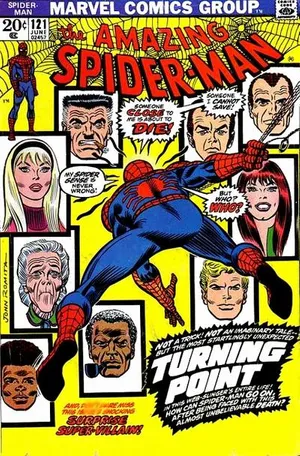
- John Romita Sr.
Rather than depicting the tragic climax of the story John Romita Sr. opted for a psychological approach. The cover features a montage-style collage of Peter Parker’s companions including Aunt May, Harry Osborn, and J. Jonah Jameson, floating around a central, distressed figure of Spider-Man. Blazoned across the bottom is “Turning Point! Someone Close to Spider-Man Dies!”
The Spectacular Spider-Man #101 (1985)
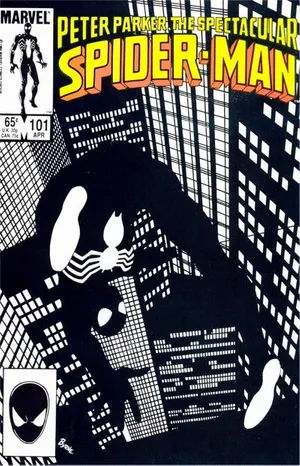
- John Byrne
Legendary artist John Byrne covers nearly 90% of the canvas in an unbroken, velvety
midnight black, split vertically by a single, sharp, geometric beam of white light cutting across a city rooftop. Crouched within this stark illumination is a highly focused Spider-Man in his alien suit, silently watching the sprawling metropolis below. This elegant vignette captures the quiet, lonely, and street-level noir aesthetic of the hero.
About Marvel Comics:
Marvel Entertainment, LLC, a wholly-owned subsidiary of The Walt Disney Company, is one of the world’s most prominent character-based entertainment companies, built on a proven library of more than 8,000 characters featured in a variety of media over eighty-five years. Marvel utilizes its character franchises in entertainment, licensing and publishing. For more information visit marvel.com. © 2024 MARVEL